Gantio Robinia System
Robinia is a strong and durable wood, but its natural, curved shape makes processing a manual craft. We have developed a system that scans each post, finds the best placement for the design, and processes it automatically. This makes the process faster and more precise, and it enables types of processing that are not feasible by hand.
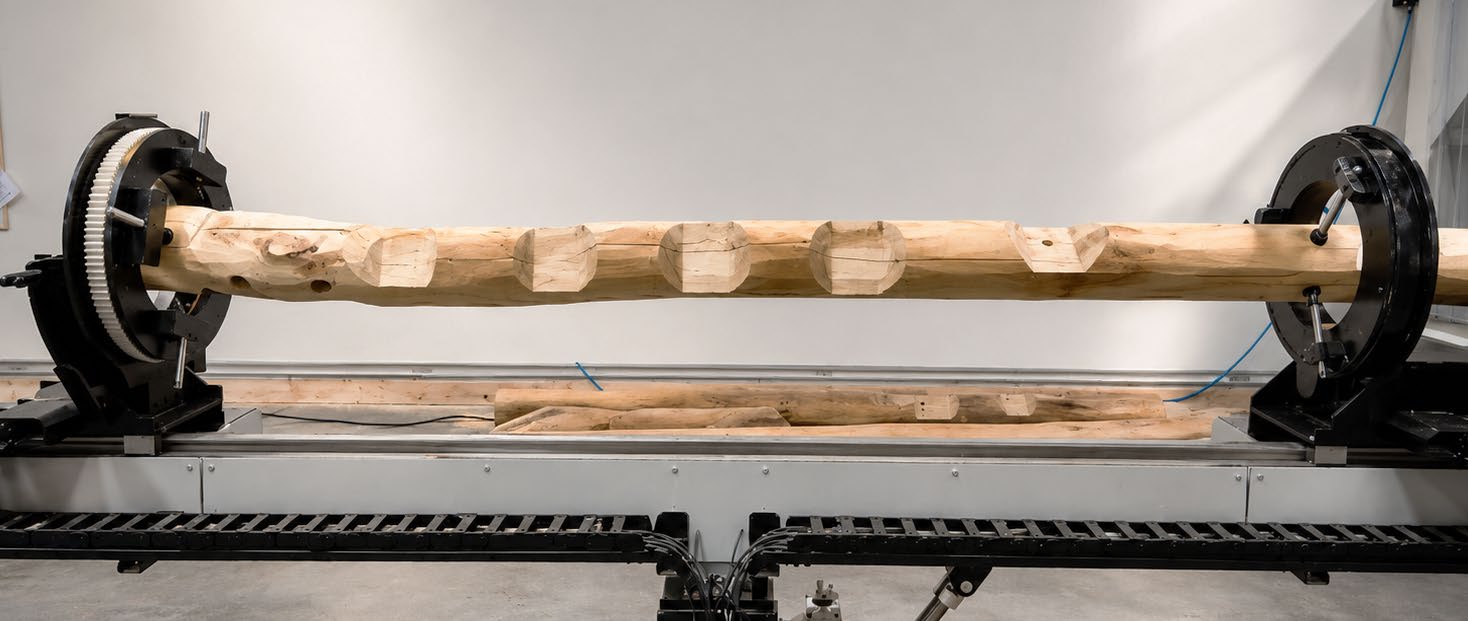
- 360°
- processing in a single setup
- No
- programming or robotics expert required
- 1–8 m
- post length, Ø 75–300 mm
No two posts are the same
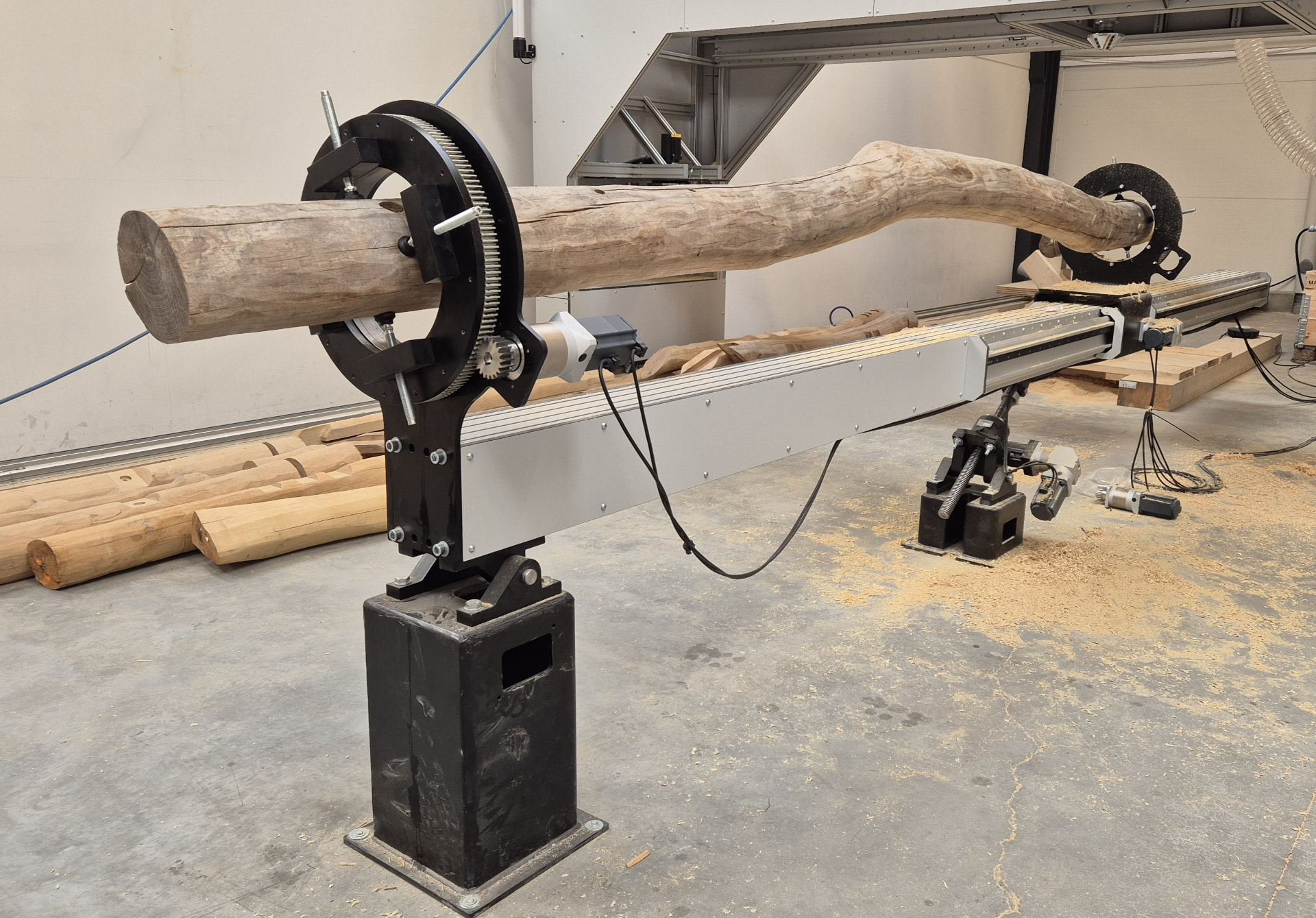
Robinia is used for playgrounds, fences, and outdoor structures, where the wood's durability and appearance are major advantages. The same natural shape that gives the material its character also makes it difficult to automate. The logs are curved, twisted, and vary in diameter, whereas a standard CNC machine expects a straight workpiece.
This is why processing is still often done by hand. Each cutout, end cut, and hole must be measured and adapted to the individual post. This is time-consuming, requires experienced craftsmen, and results in variations from one item to the next. And when a design has to be fitted to a curved log by eye, the material is rarely used optimally.
Robinia is a fantastic material, but its natural shape has made it difficult to automate. With the Robinia System, we let technology handle the complexity. The operator places the post, and the system does the rest, without anyone needing to program a robot.
Scanning, matching, and processing in one system
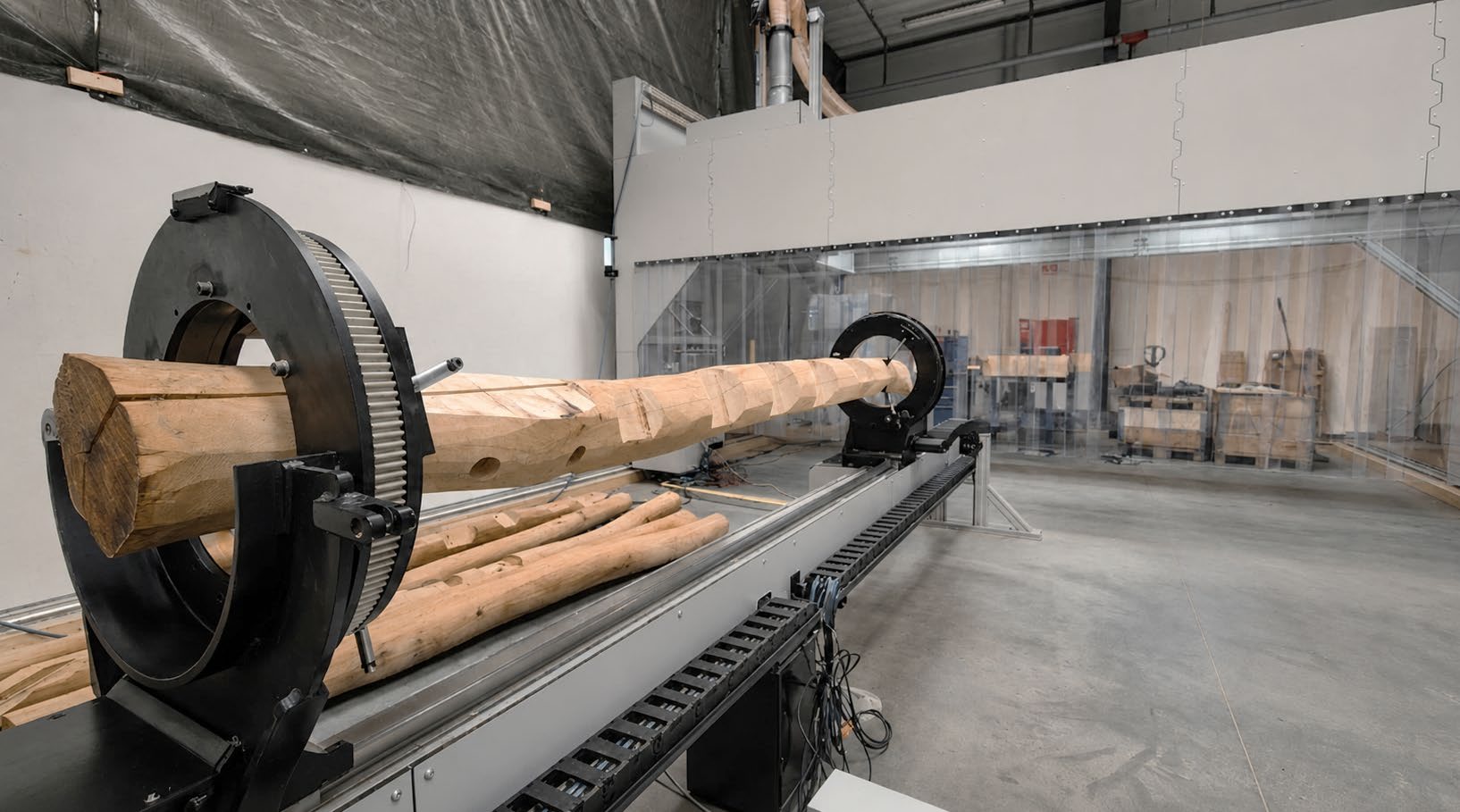
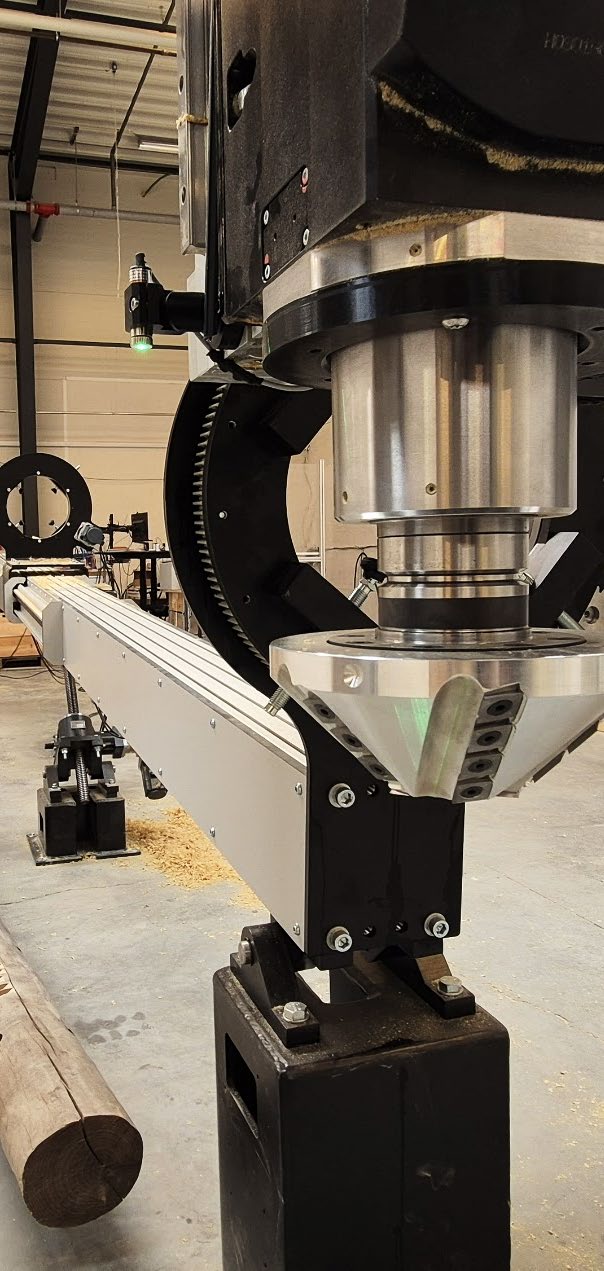
The Robinia System is built around our gantry robot on a rail system that can be extended as needed. The posts are clamped in rotation tables that turn them 360°, allowing the robot to process them from all sides without re-clamping.
Before processing, a 3D line scanner scans the entire post with sub-millimetre precision. The software determines the post's geometry, selects the work package and orientation that best fit the actual shape, and generates the machining process itself. The operator does not need to program, and there is no need for a robotics expert on the factory floor.
- Automatic scanning and geometry detection of each post
- The design is matched to the post's natural shape for better material utilisation
- Cutting, milling, and drilling in 360° in a single setup
- Flexible input format, so the design can come directly from your own files
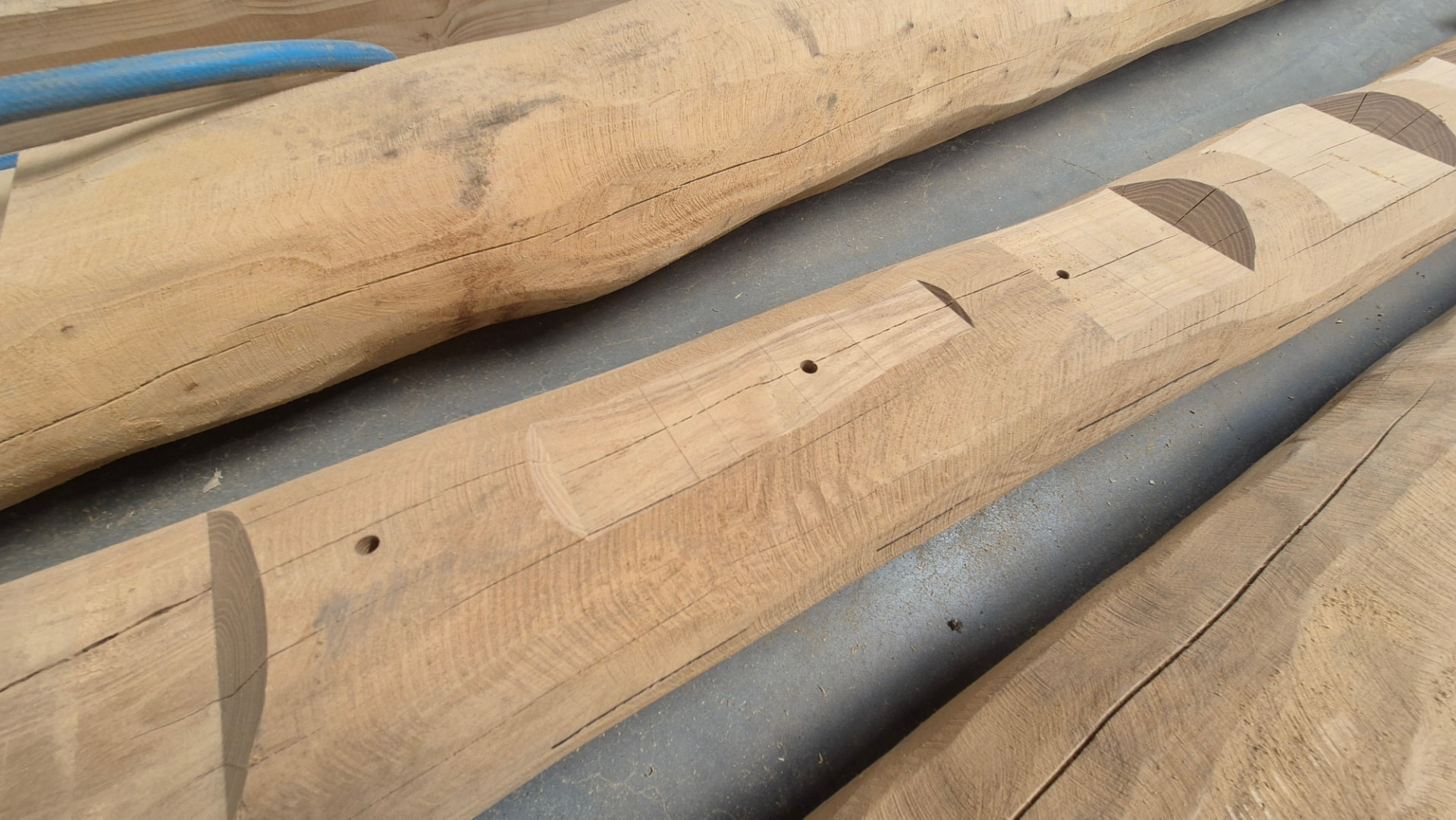
From raw post to finished element
The entire process runs automatically. The operator places the post in the rotation tables and starts the job.
Scanning
A 3D line scanner measures the entire post with sub-millimetre precision, creating a point cloud of its actual geometry.
Matching
The system identifies key geometric points and selects the work package and orientation that best fit the post's shape, ensuring optimal material utilisation for the design.
Processing
The rotation tables lock and turn the post while the robot cuts, mills, and drills with automatic tool changing. No programming required.
Quality Control
An optional post-scan documents the finished element, and process data is shared for traceability and quality assurance.
See the post before and after processing
The point clouds are scanned by the system. One shows the post as it arrived, the other the finished element. Drag the slider to compare, and rotate the model to see the cutouts, end cuts, and drillings from all sides.

Built to scale with your production
The number of workstations is adapted to the production needs. We recommend two rows with one to three stations each, so the robot can process in one row while the operator loads and unloads the other. This allows loading and processing to run in parallel.
The robot is equipped with a 16 kW liquid-cooled HSD spindle, an automatic tool magazine with 16 slots (HSK 63F), and a 3D line scanner. The system has an integrated safety system, is CE-marked, and is built for demanding environments with an IP64 rating and operation between 5 and 40 °C.
With more than 200 live measurements from the system, we can monitor operations and provide online support directly from our headquarters in Tommerup.
Faster, more precise, and new possibilities in the material
With the Robinia System, a manual and experience-heavy job becomes an automated process. Each post is processed according to its own geometry, so cutouts, end cuts, and holes are positioned precisely, even when the log is curved.
Our estimates show a cycle time of 10-15 minutes for a 2-metre post with multiple cutouts, end cuts, and drillings. Because the system knows the post's shape, it also opens up possibilities for processing that is not feasible by hand, and for designs that are adapted to the natural material instead of fighting against it.
The system was developed with robinia as the starting point, but it can also be used for other types of posts and roundwood.
System Facts
- Items
- Robinia and other posts with natural shapes
- Post size
- Ø 75–300 mm, 1–8 m, curvature within Ø 500 mm
- Processing
- Cutting, milling, and drilling in 360°
- Equipment
- 16 kW HSD spindle, 16-slot tool changer, 3D line scanner
- Workstations
- Up to 6 rotation tables in two rows
- Estimated cycle time
- 10-15 min per 2 m post
- CE and environment
- CE-marked, IP64, 5–40 °C
- Our role
- Design, production, commissioning, and online support
Do you work with robinia or other types of posts?
Tell us about your items and production, and we will demonstrate the system and get back to you with a proposal. No obligation.