The Rammed Earth Robot
An innovation project, based on the Leralliancen, that transforms artisanal rammed earth construction into an industrial, robot-based production process. The goal is to make rammed earth a viable, scalable building material.
From demonstration project to industrial production
Earth is one of the world's oldest building materials. Analyses from Leralliancen show that hybrid construction using timber and rammed earth can reduce the CO₂ footprint by up to 75%, and the material has proven benefits for the indoor climate – including moisture regulation, high thermal comfort and low toxicity. At the same time, surplus soil from construction sites can be recycled instead of being sent to landfill.
Despite this, the material is rarely used in conventional building projects. Today's rammed earth production is based on manual labour and is difficult to scale, and the industry lacks standardisation, regulatory frameworks and more full-scale case studies. For rammed earth to become a real alternative, production must be faster, more consistent and easy to document – without losing the qualities that make the material attractive.
With Leralliancen 1.0, we documented that prefabricated rammed earth elements can be used in construction. With Leralliancen 2.0, we are moving from laboratory tests to actual implementation – and that requires us to scale up the robot-based production methods and establish the right processes.
A robotic cell that rams, handles and documents
In our workshop in Tommerup, we are developing a dedicated robotic cell for rammed earth production. The work builds on several generations of robot-controlled ramming tools, where formwork, compression method and material feed have been fine-tuned step by step in an experimental, learning-oriented process.
Because we both build the robots and run commercial production with them, we can test the methods under realistic conditions. Once the process is stable, we will describe and share it as an open knowledge base through Leralliancen.
- Scaling the robot-based ramming process to element sizes
- Automated handling of moulds and finished elements
- Traceability between the digital model, production data and the physical element
- Testing and documentation under realistic production conditions
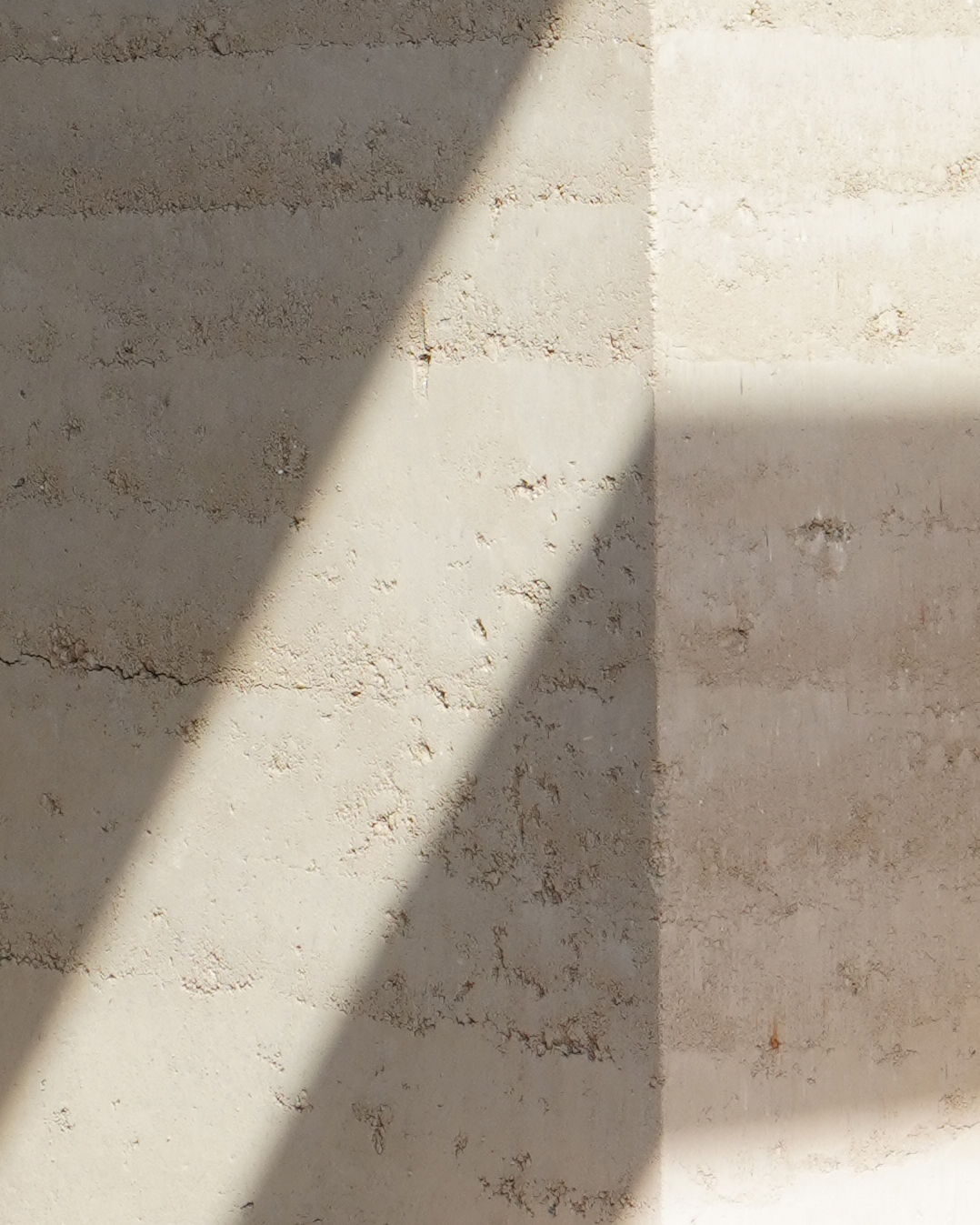
How the robotic cell is put together
Multiple generations of ramming tools
Formwork, compression method and material feed have been fine-tuned step by step through several generations of robot-controlled ramming tools.
Automatic handling of heavy elements
From raw earth to finished element: the robot handles moulds, compression and lifting, so production does not rely on heavy manual labour.
From digital model to physical element
Geometry and layer data from the digital model are transferred directly to the robot, ensuring tolerances, traceability and documentation are maintained throughout the process.
Documentation for the industry
Methods and results are disseminated as an open knowledge base, allowing other manufacturers to build on the technology on equal terms.
The robotic cell in operation
The gantry robot moves over the mould and compacts the earth layer by layer with a dedicated ramming tool. The formwork system keeps the element in position, while the robot controls the pressure, position and number of impacts based on the digital model.
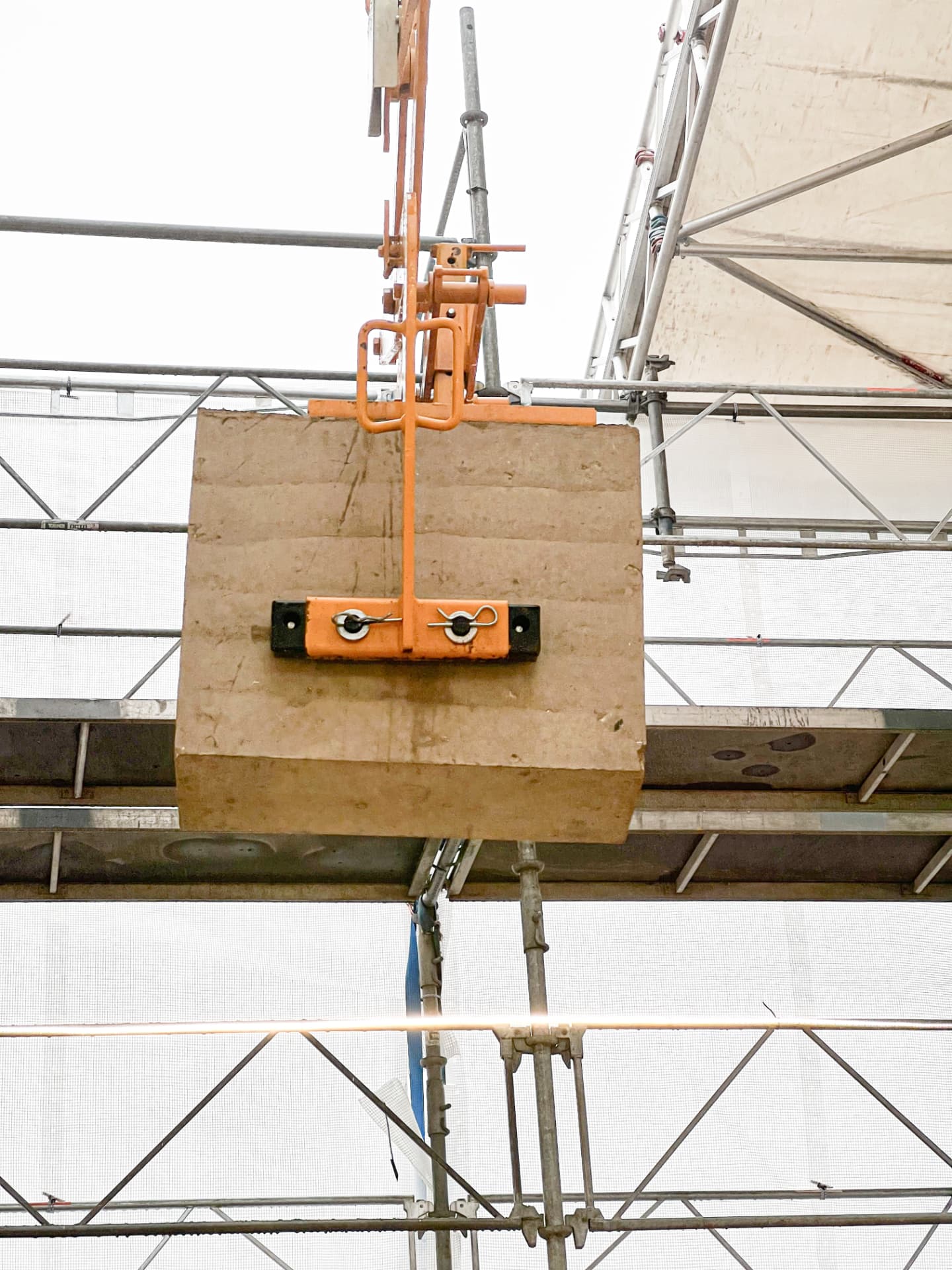
A production method the industry can build on
The Rammed Earth Robot is not a closed system, but a development project intended to provide the entire industry with a path to producing rammed earth elements on a larger scale. All methods, measurements and experiences are shared through Leralliancen's open documentation, and the first pilot projects – including Travbyen in Billund and the community house in the Bellakvarteret district on Amager – show that the material is already ready for use.
For Gantio Robotics, the project is also a further development of our systems expertise: we are taking a known robot platform and adapting it to a new material and a new process – proving along the way that the technology can be transferred to other building materials and production tasks.
Project facts
- Project
- The Rammed Earth Robot (Leralliancen)
- Project period
- 2026–2029
- Budget
- 4.5 million DKK, supported by Realdania
- Location
- Gantio Robotics, Tommerup
- Material
- Rammed earth
- Our role
- Development of robotic cell, ramming tools and production method
- Partners
- Juul Frost Arkitekter, ReVærk, Engel Architects, Én jord, DTU, PensionDanmark, CPH Village, KIRKBI etc.
- Output
- Technical documentation, execution guide, test data
Do you have a material that needs a robot?
Tell us about your product and production, and we'll get back to you with a proposal. No obligation.