Leralliancen
An interdisciplinary partnership set to make prefabricated rammed earth elements a viable and safe choice in Danish construction practice. Gantio Robotics is the grant recipient, responsible for scaling the robot-based production methods.
- 2026–2029
- project period for Leralliancen 2.0
- DKK 4.5m
- total budget, supported by Realdania
- Open
- knowledge base freely available to the industry
From demonstration projects to open market practice
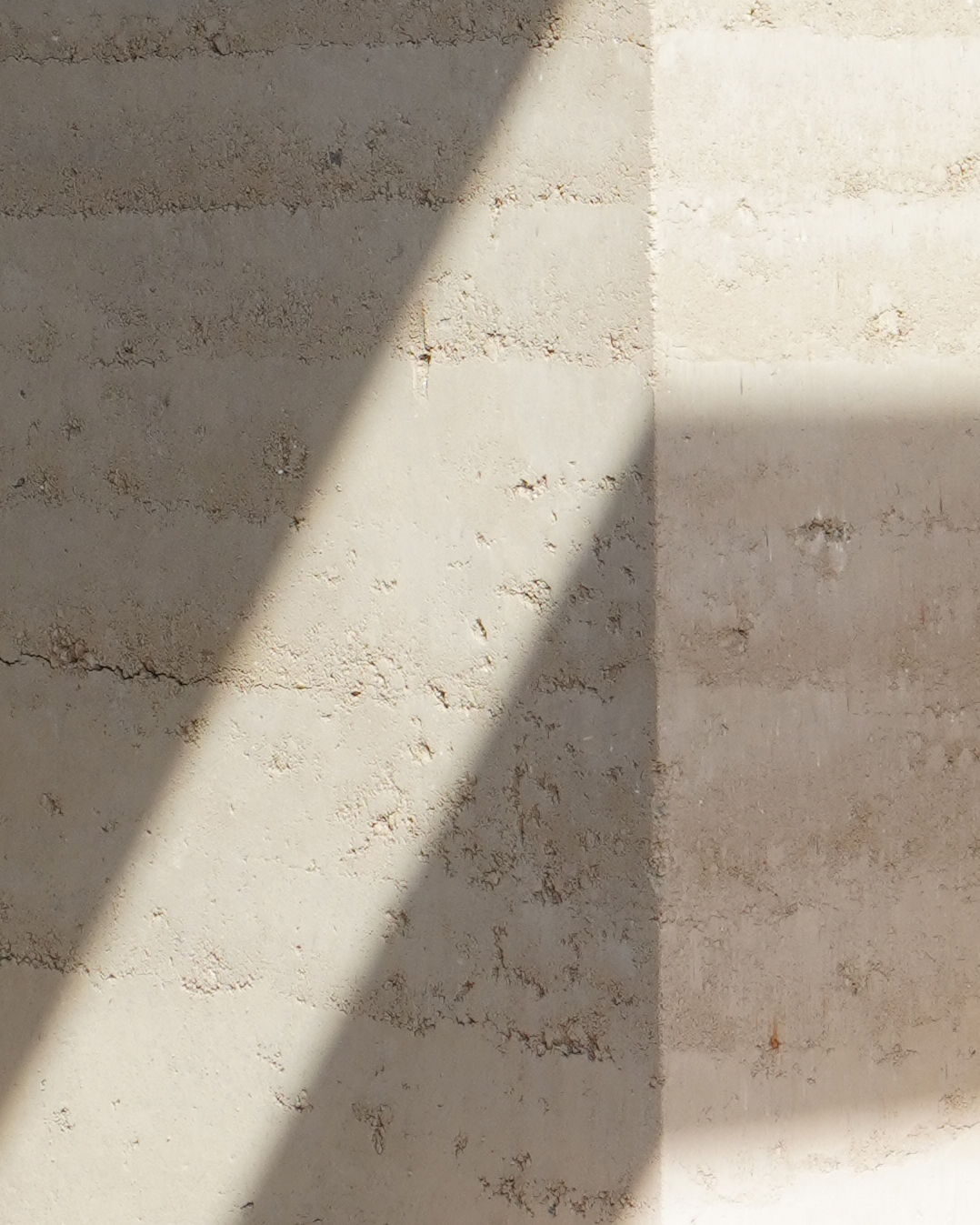
Until now, rammed earth has primarily been used in one-off demonstration projects. A lack of standardisation and pre-documented solutions means the material is rarely considered a viable alternative in clients' project briefs.
Leralliancen 1.0 (2023–2025) documented that prefabricated earth elements can be used in construction. Leralliancen 2.0 is translating this knowledge into standardised solutions for the Danish context, technical documentation, and practical know-how, which will be made freely available for direct use on future construction sites.
Why rammed earth?
- Recyclable resource with minimal waste in production
- Low CO₂ footprint compared to conventional materials
- Passive indoor climate regulation
- Fire-retardant properties
Robotic production that can scale
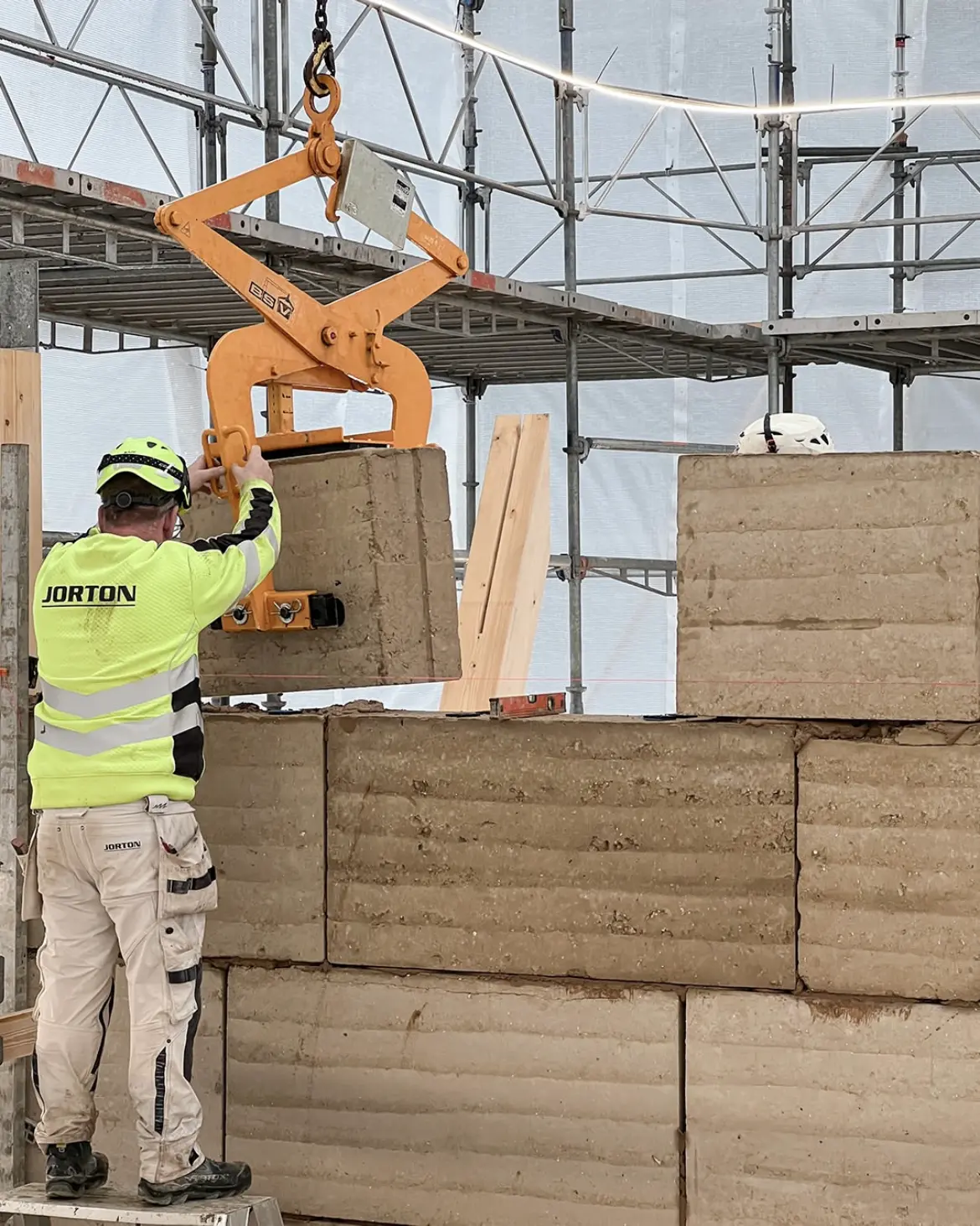
As the grant recipient, Gantio Robotics is responsible for taking production from the laboratory and prototype level to an industrial scale. This involves robot-based methods for ramming, processing, and handling the elements with repeatable quality—and creating processes that can be documented and transferred to other manufacturers.
- Scaling the robotic production methods for rammed earth elements
- Establishing processes that ensure repeatable quality across production runs
- Reducing regulatory risk through a clear basis of documentation
- Working to make the solutions economically competitive for the industry
With Leralliancen 1.0, we documented that prefabricated earth elements can be used in construction. With Leralliancen 2.0, we are moving from laboratory tests to actual implementation—and that requires us to scale the robotic production methods and establish the right processes.
Earth in a built context
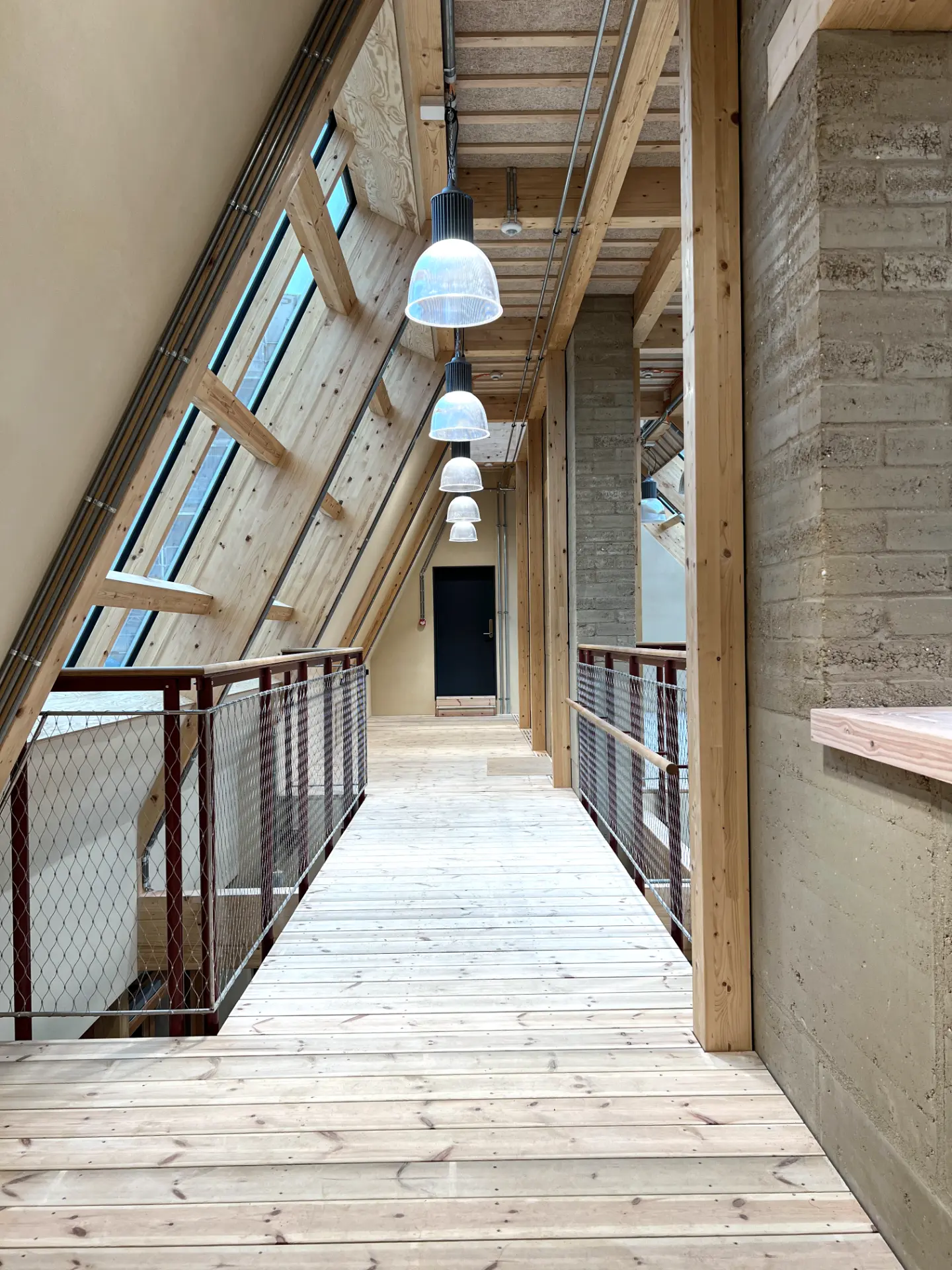
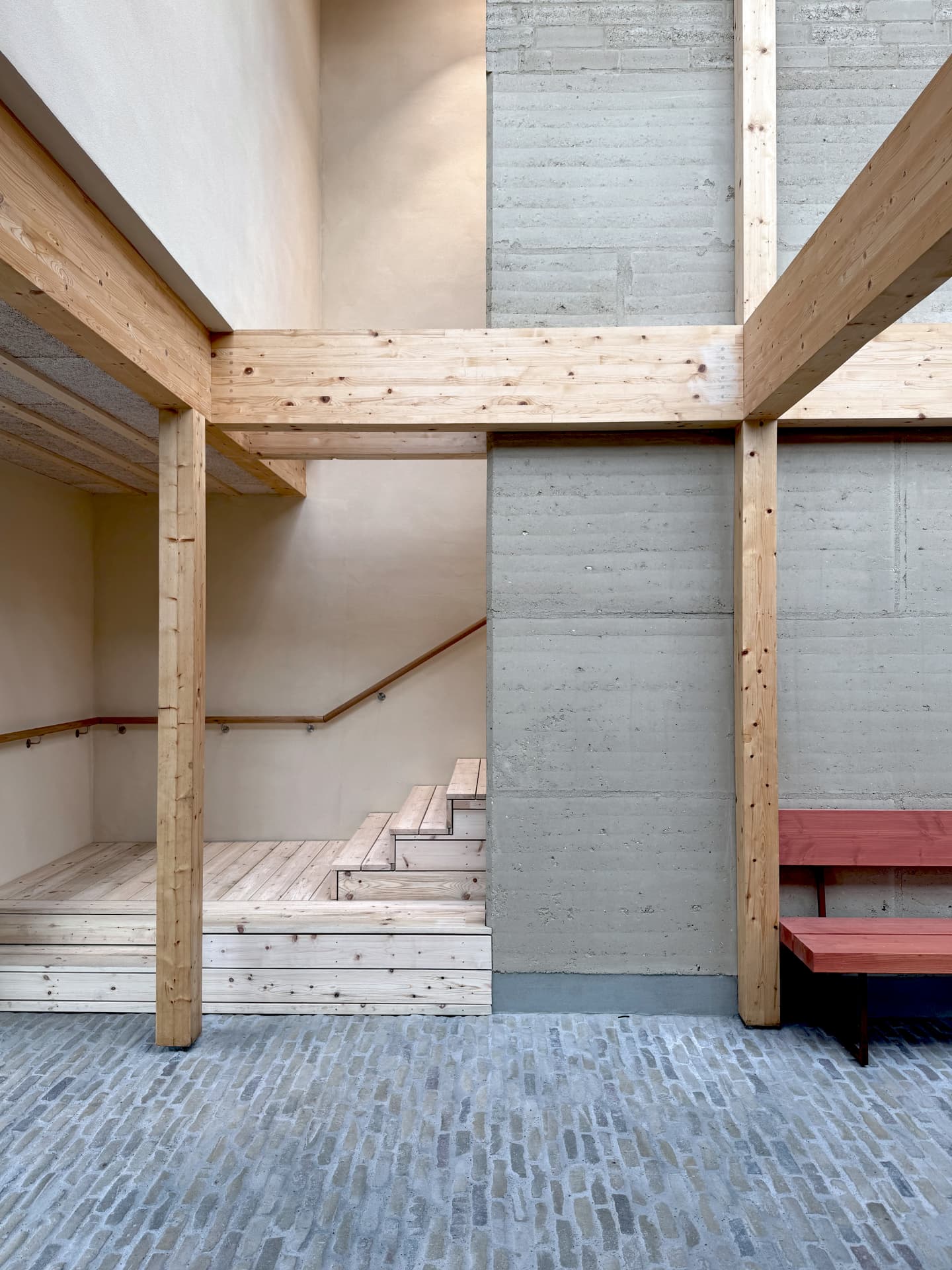
The prefabricated elements meet the timber structure on site, where joints, transitions and surfaces become spaces. The result is a structure that is both load-bearing and showcases the nature of the materials.
Knowledge made freely available
The project delivers an open knowledge base, allowing the solutions to be used directly in specific construction projects.
Technical documentation
Data sheets and documentation to enable rammed earth to be included in traditional tenders without additional regulatory risk.
Design manual
A freely available manual for designers, enabling solutions to be selected and dimensioned on a common basis.
Execution guide
A practical guide to element handling and assembly, based on experience from completed projects.
Fire and strength tests
Verified test results made available as an open knowledge base for the entire industry.
Clients and consultants are invited to join
As a key part of the project, Leralliancen is inviting a wider circle of clients and consultants to contribute with specific construction projects and application needs. The aim is to directly integrate real market demands into the development work, ensuring that technical approvals and guidelines are developed based on the actual needs of the industry.
If rammed earth is to move from being a niche material to a real standard in Danish construction practice, it will take more than good results in the laboratory. It requires a common foundation, approvals, and experience from the real world.
Leralliancen 2.0 is very much an implementation project. The ambition is for the technical approvals and guidelines to be developed based on the needs that clients and consultants face in reality.
Developed at our own facility in Tommerup
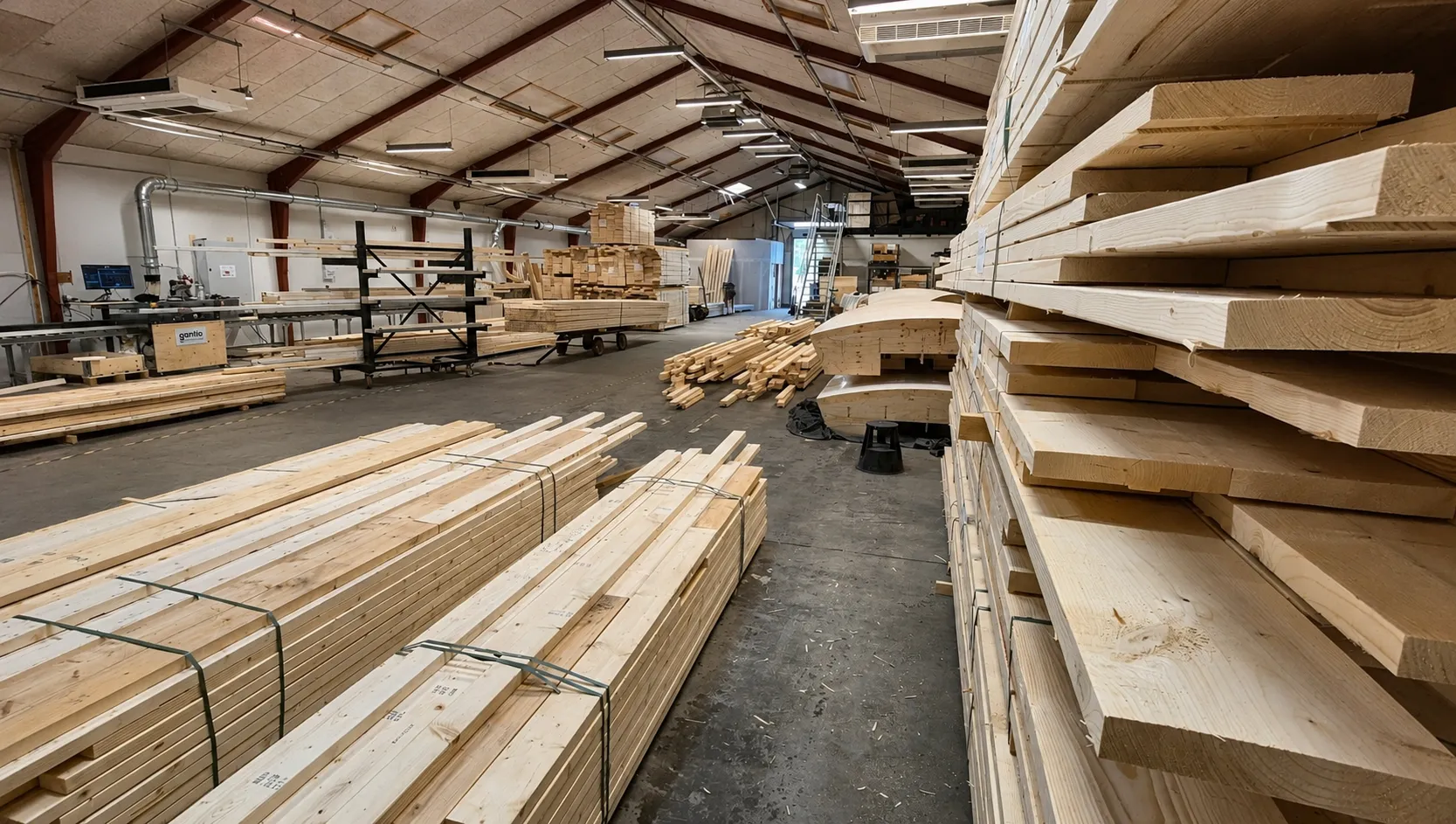
The production methods are developed and tested at our own robotic facility, where we run commercial production every day. This allows us to test elements, clamping, and processing under realistic production conditions before the methods are documented and passed on to the industry.
Project facts
- Project
- Leralliancen 2.0
- Project Period
- 2026–2029
- Budget
- DKK 4.5 million, supported by Realdania
- Our Role
- Grant recipient and robotic production
- Material Development
- ReVærk
- Project Management
- askehave · dusine
- Other Partners
- én jord and Jorton
- Knowledge and Test Partners
- Artelia, Danish Technological Institute, DTU, BUILD, DBI and Werner Sobek
The technical development is also supported by MUDP and Closing Loops (co-financed by the European Union/Danish Board of Business Development), among others.
Do you have a project where earth could play a role?
We would like to hear from clients and consultants with specific construction projects and application needs.